Why Your Northern Cyprus Business Needs a Turkish and English Website
Your customers speak at least two languages. Here is how a bilingual website wins more local, student, expat and tourist customers, and how to do it properly.
Your customers do not all speak one language
Northern Cyprus is a place where a Turkish-speaking local, a university student from another continent, a British retiree and a visitor from mainland Turkey might all want the same service. Universities in the north report tens of thousands of international students from dozens of countries (EMU), and over 1.3 million visitors stayed in tourist accommodation in 2024 (Fair Observer).
A website in only one language quietly turns many of those people away. They do not complain, they just leave and call a competitor.
What a bilingual site gives you
- Trust. People trust businesses that speak to them in their own language. It shows you are open to them.
- More search traffic. Someone searching in Turkish and someone searching in English type different words. One language version cannot rank for both.
- Fewer questions. Prices, opening hours and policies in the reader's language mean fewer misunderstandings by phone and WhatsApp.
- A stronger first impression. A careful translation tells visitors the business is professional.
How to do it properly
1. Translate, do not just convert
Machine translation is fine for understanding a page, not for publishing one. Have a native speaker write or review each language. Turkish and English also differ in tone and in how people expect a business to sound.
2. Give each language its own address
For search engines, the cleanest setup is one URL per language, for example /en/services and /tr/hizmetler, linked together with hreflang tags. That lets Google index both versions and show the right one to each searcher.
3. Let visitors choose, and remember it
Detecting the visitor's language or country is a helpful default, but always show a visible language switch. Remember the choice for next time.
4. Localise the details
Check dates, phone formats and prices. Prefer a currency your customers think in, and say clearly which one you charge in. Add a WhatsApp button, because that is how a lot of local business is done.
5. Do not forget the invisible parts
Page titles, meta descriptions, image alt text, form messages and email confirmations all need translating. Missing translations in these places are the most common giveaway of a half-finished bilingual site.
Which pages to translate first
If budget is tight, start with the pages that sell:
- Homepage
- Services or products
- Pricing
- Contact and location
- FAQ
Add the blog and secondary pages afterwards.
How we handle it
Every site we build can be delivered in Turkish and English. The DgtalBlend website you are reading switches language based on the visitor's country and browser, with a one-click switch for everyone else. If you want the same for your business, see our custom website packages or tell us about your project.
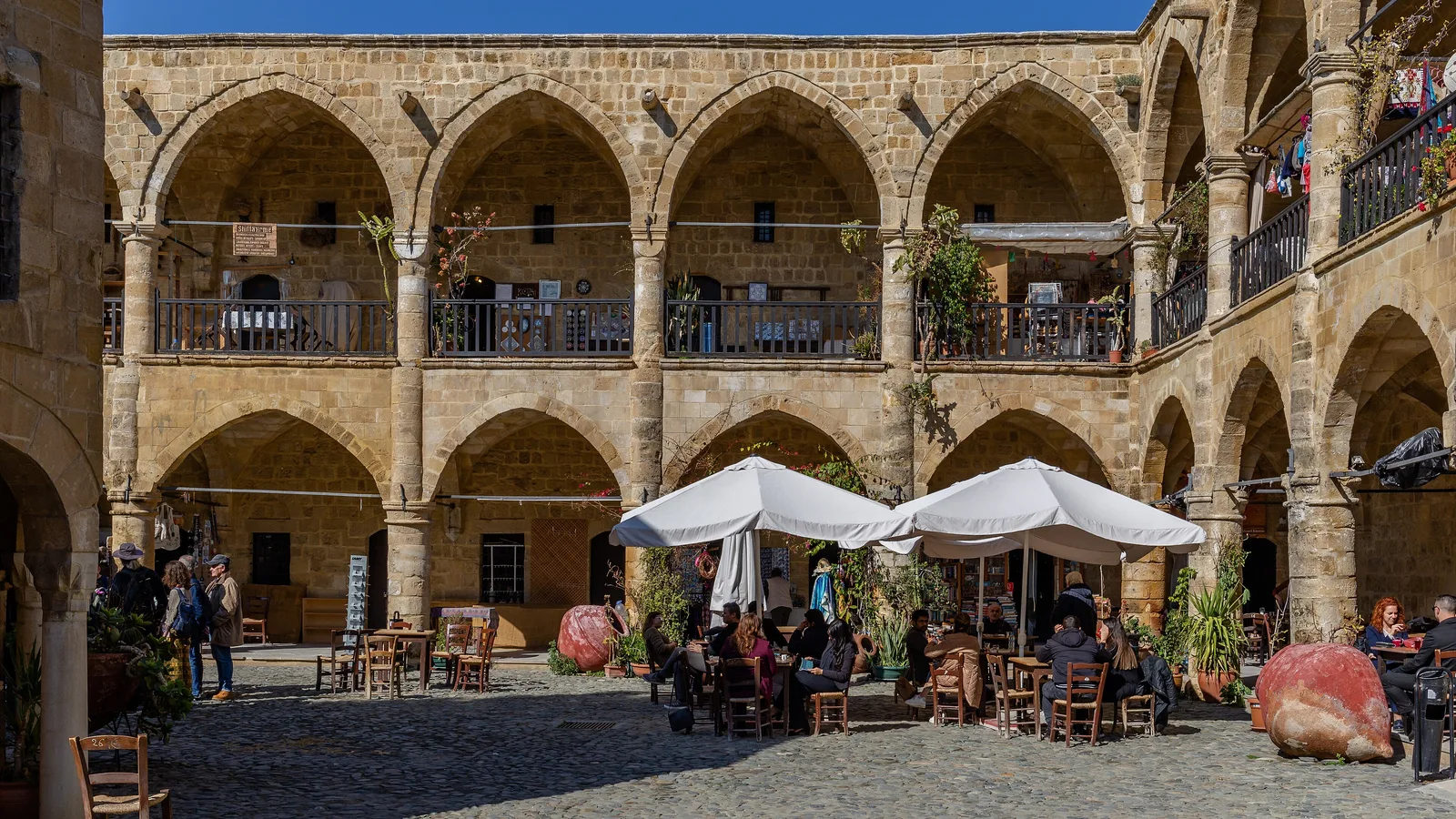
Cover photo: [Büyük Han, Nicosia](https://commons.wikimedia.org/wiki/File:B%C3%BCy%C3%BCk_Han,_Nicosia,_Cyprus.jpg) by Michal Klajban, [CC BY-SA 4.0](https://creativecommons.org/licenses/by-sa/4.0/).
- #multilingual website
- #turkish
- #english
- #northern cyprus
- #seo
Share this article